Yesterday (Friday) was one of those days where I didn’t really have a concrete plan—I just sort of winged it.
I knew I didn’t want to venture too far from home since I wanted to spend time with my family, and with summer in full swing I knew traffic was bound to be a nightmare.
And guess what… it was.
I decided to head to Woburn, Massachusetts, a city that had several names I’d been eager to cross off my ever-growing lists of graves to visit.
Woodbrook Cemetery
My first stop was Woodbrook Cemetery, where I visited the graves of Congressman Benjamin Whittemore and Helen Blake, one of the victims of the Boston Strangler. One interesting discovery was that Helen’s grave remains unmarked, something I always find both fascinating and heartbreaking.
There is also a Find a Grave memorial for legendary radio and television announcer Fred Foy, but after speaking with the cemetery staff, I was able to confirm he is not buried there. That explains why no gravesite photograph has ever been added to his memorial.
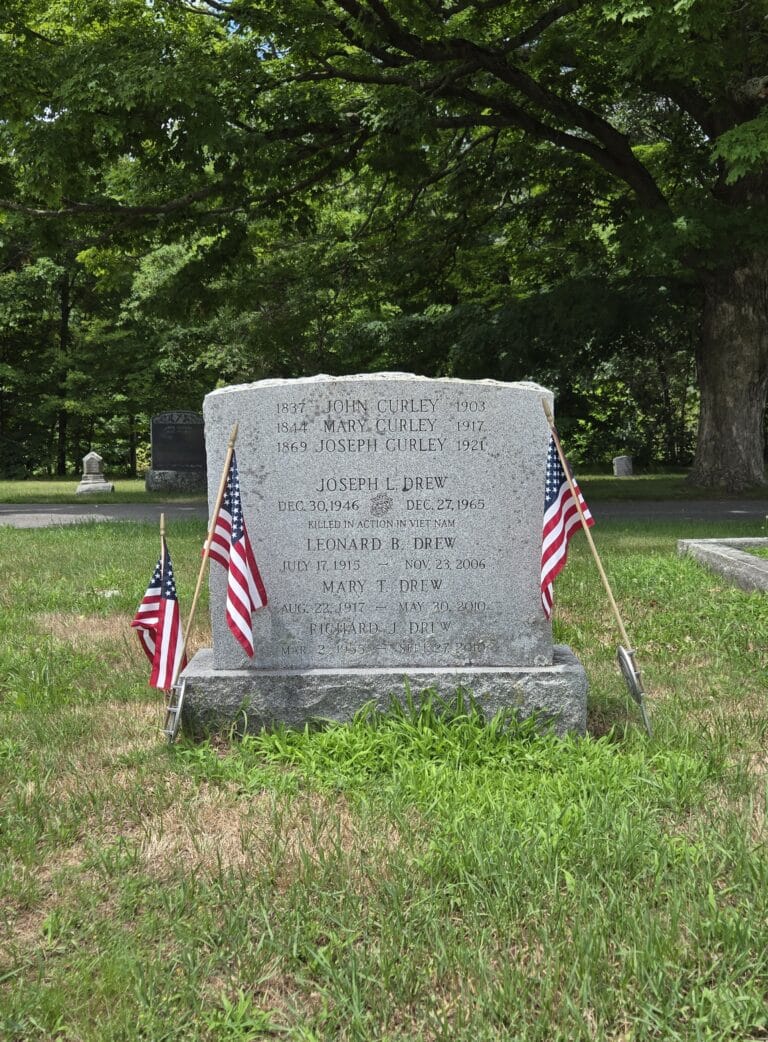
While walking the cemetery, I also came across several World War II, Korean War, and Vietnam War casualties whose biographies will be added to AtRestoration.org over the coming days.
First Burial Ground
Just a short distance away is First Burial Ground, home to several notable early Americans I hoped to photograph.
Unfortunately, the cemetery was locked and requires advance notice to gain access.
Sadly, that seems to be becoming more common. While I certainly understand the reasons behind restricting access, it’s always disappointing to arrive somewhere only to discover the gates are locked.
Calvary Cemetery
My next stop was Calvary Cemetery in neighboring Winchester, Massachusetts.
Although I’ve visited Winchester’s Wildwood Cemetery several times, this was my first trip to Calvary, a Catholic cemetery operated by the Archdiocese of Boston.
If you’ve followed my work for any length of time, you probably know one of my biggest challenges with Catholic cemeteries. Many don’t have offices on site, and locating burial information can sometimes feel like trying to access the Vatican archives.
Fortunately, this visit turned out much better than expected.
While wandering through the grounds, a caretaker operating a backhoe stopped to ask if I needed help. He shared some excellent information, including how to contact the Boston Catholic Cemetery Association, which can often locate burial plots if given enough advance notice. He also pointed me toward a newer online search tool covering nearly thirty Catholic cemeteries throughout Massachusetts.
Unfortunately, we still couldn’t locate burial information for U.S. Representative Michael Joseph McEttrick, who is believed to be buried at Calvary.
Even more intriguing, I learned there are approximately 25 fallen servicemen from World War II, Korea, and Vietnam buried there whose exact graves remain unidentified. Needless to say, I’ll be returning.
Woburn’s Jewish Cemeteries
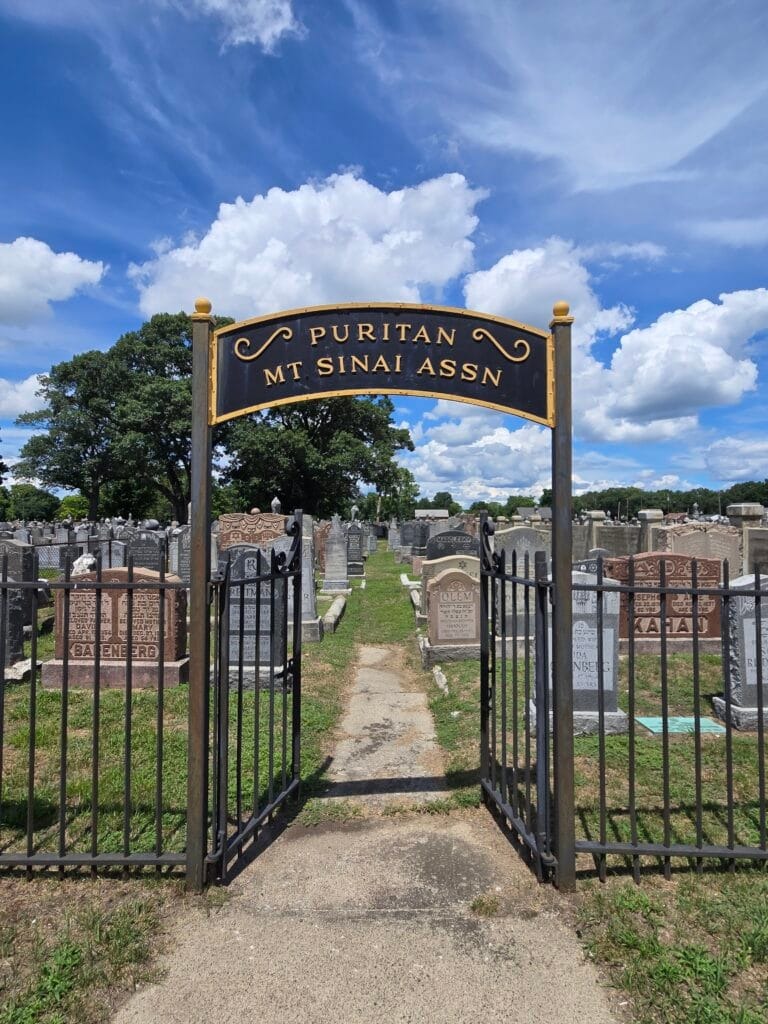
Connected to Calvary are more than two dozen Jewish cemeteries that follow the Woburn-Winchester town line.
These have become some of my favorite places to explore.
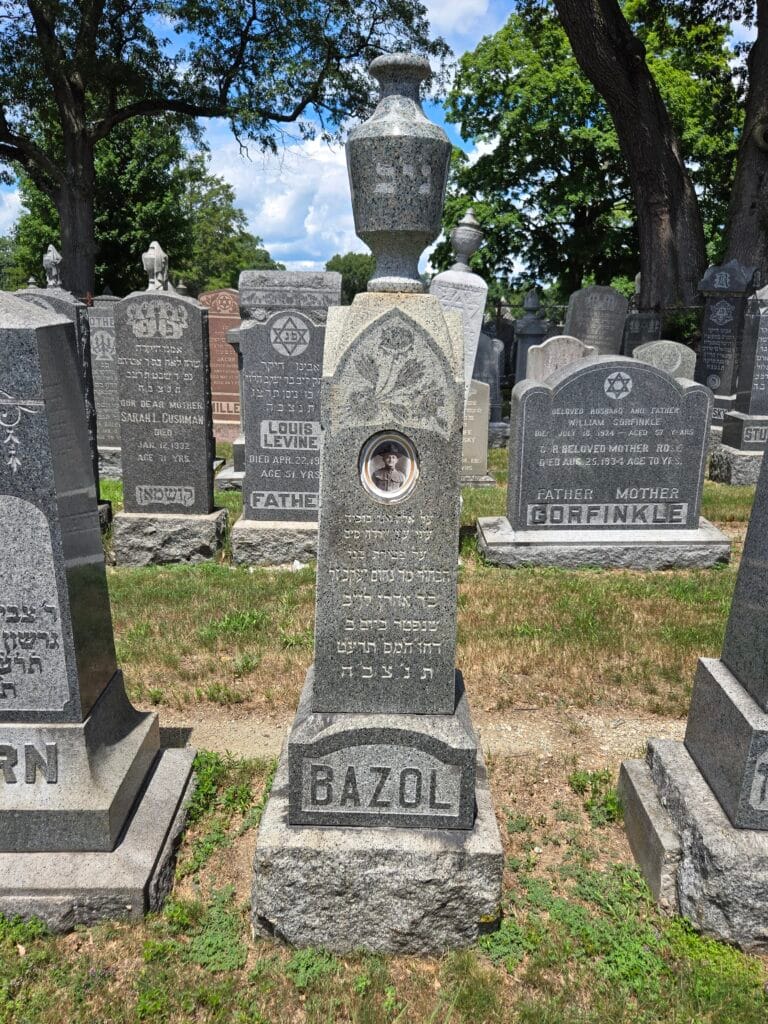
They’re incredibly peaceful. Thousands of graves sit closely together, each representing families and communities that helped shape Greater Boston.
They’re also places where you have to watch every step.
Many of these cemeteries are older, and the uneven ground reminded me of that yesterday when I managed to twist my ankle after stepping into what appeared to be an animal burrow. Thankfully, nothing more than a sore ankle and bruised pride.
I visited only six of the cemeteries this time. The weather was hot, and I wasn’t looking to exhaust myself.
Besides, I always like having an excuse to come back.
Pride of Boston Cemetery
One of my first stops among the Jewish cemeteries was Pride of Boston Cemetery.
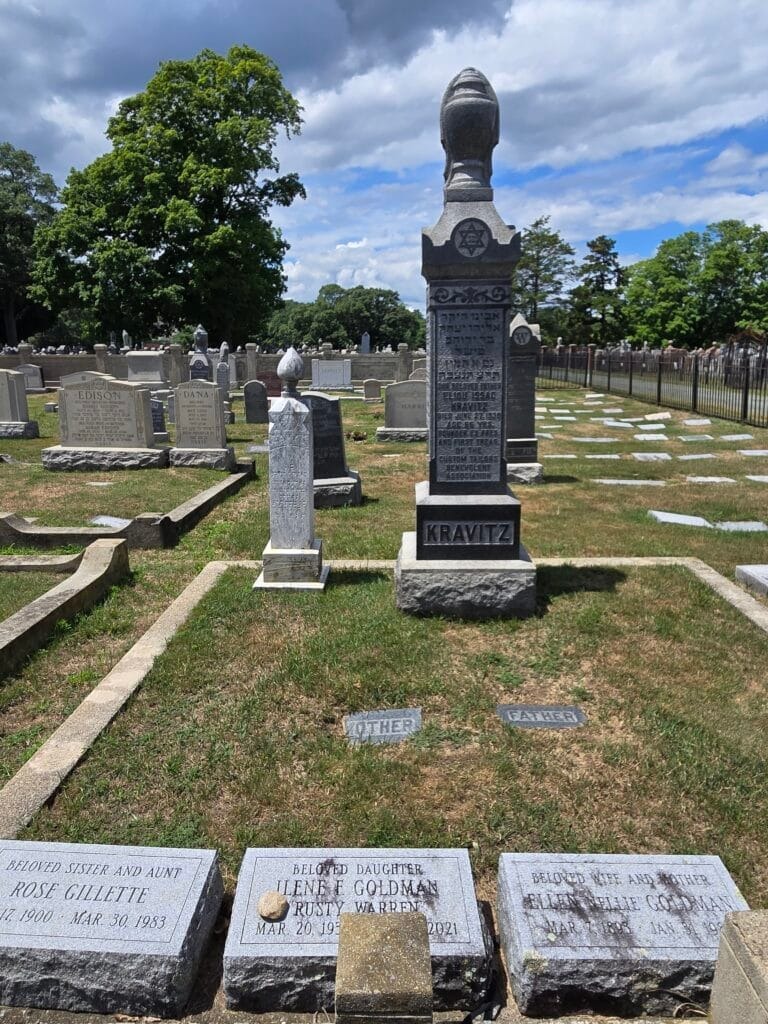
There I located the grave of Rusty Warren, the groundbreaking comedian and singer whose fearless humor challenged social taboos during the 1950s and 1960s. Best remembered for her comedy hit “Bounce Your Boobies,” Warren became one of the earliest female entertainers to openly discuss sexuality through comedy, helping pave the way for future generations of performers.
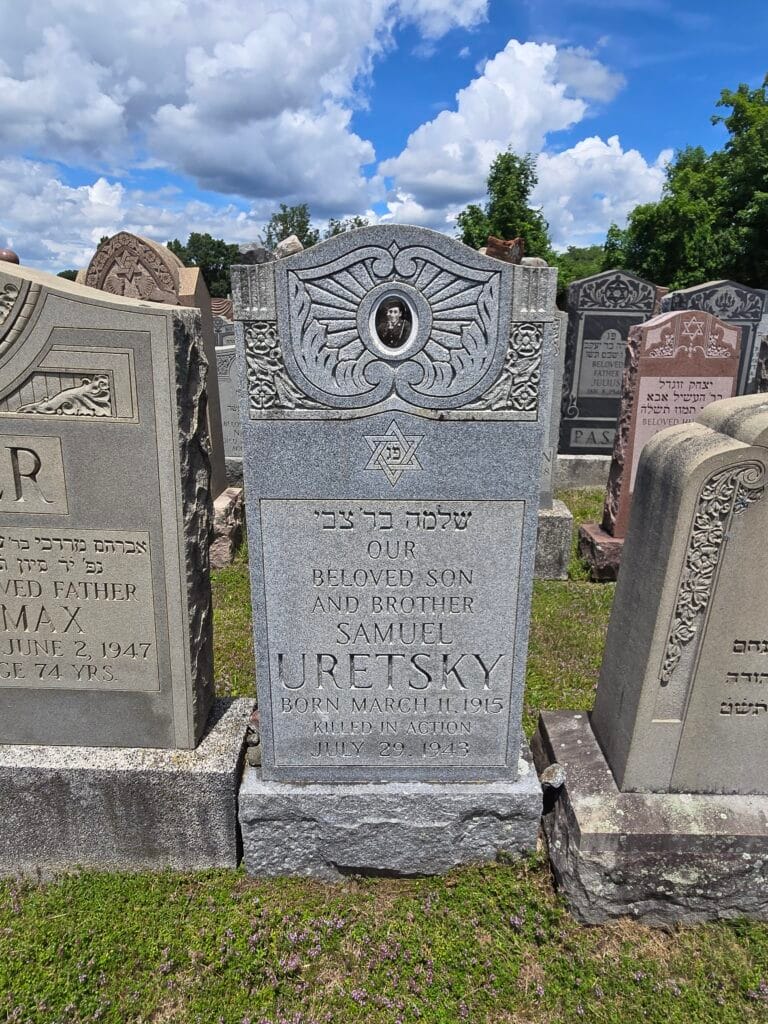
While exploring the cemetery, I also came across several veterans who weren’t on my original list.
One, however, immediately caught my attention.
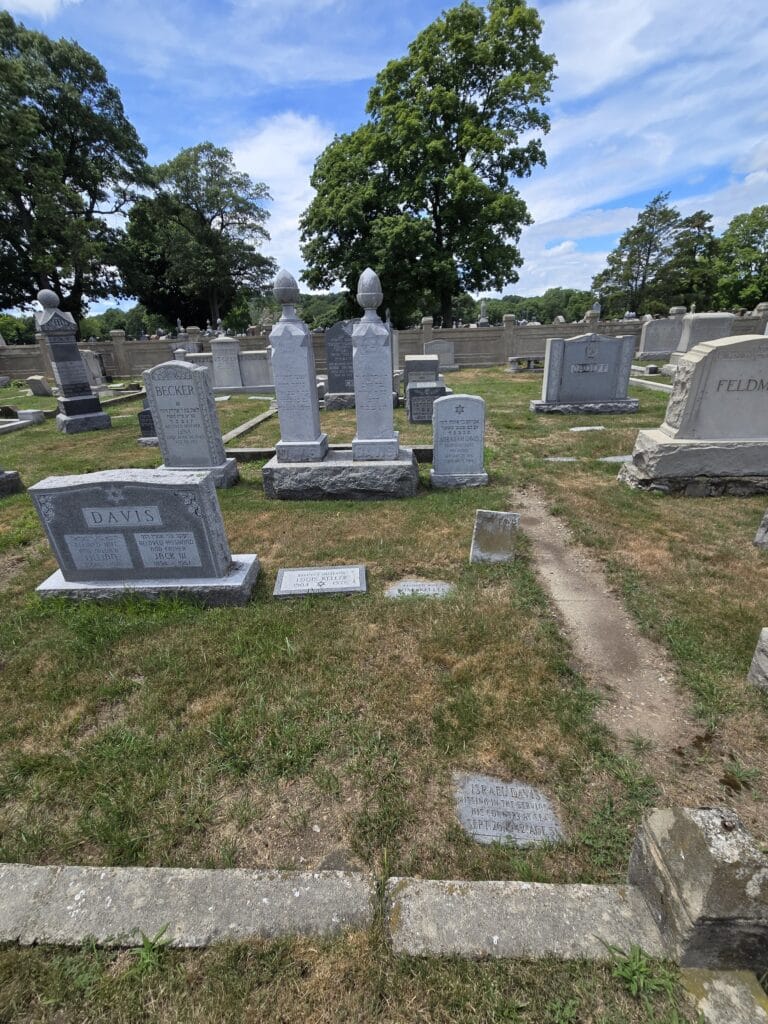
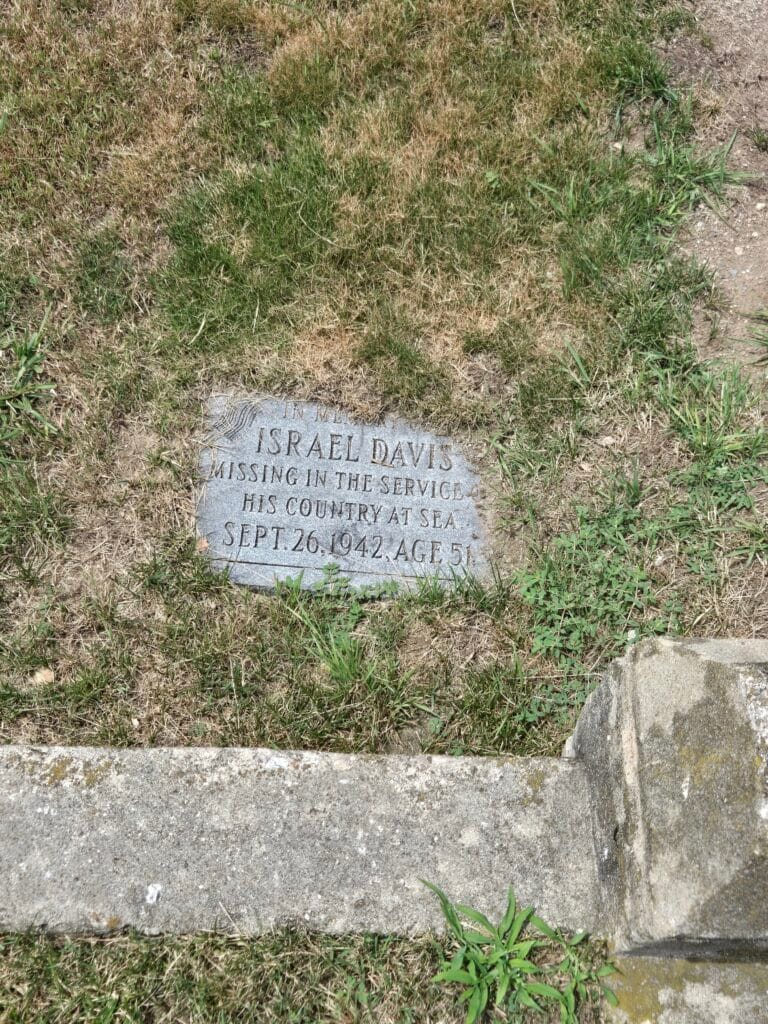
A bronze military marker had nearly disappeared beneath the grass.
After carefully clearing away the dirt surrounding it, I uncovered the cenotaph of Seaman Apprentice Israel Wolf Davis, a 51-year-old Coast Guardsman who never came home from World War II.
What began as a routine photograph quickly turned into one of the most fascinating stories I’ve researched in quite some time.
Davis served aboard USCGC Muskeget (WAG-48), a weather ship operating alone in the North Atlantic. While these vessels rarely receive the attention given to battleships or aircraft carriers, they performed an essential mission. Their weather reports helped Allied commanders plan convoy routes, naval operations, and military flights across the Atlantic.
On August 24, 1942, Muskeget departed Boston for another weather patrol.
She never returned.
The ship continued transmitting weather reports until September 9, when radio contact suddenly ceased. It was later determined that Muskeget had been torpedoed by the German submarine U-755.
Everyone aboard was lost.
The sinking claimed the lives of 155 people—Coast Guardsmen, civilian Weather Bureau employees, a U.S. Public Health Service officer, and merchant mariners being transported to Greenland. No distress call was received. No survivors were found.
One year later, Israel Davis and the rest of the crew were officially declared killed in action.
Today, most people recognize names like USS Arizona, USS Indianapolis, or USS Juneau. Yet despite representing one of the deadliest losses in Coast Guard history, the story of USCGC Muskeget has largely faded from public memory.
Standing over Israel Davis’s nearly forgotten memorial reminded me why I started At Restoration in the first place.
History doesn’t disappear all at once.
Sometimes it slowly sinks beneath the grass until someone stops long enough to notice.
One Final Stop
Before calling it a day, I had one more grave to locate.
Barnett “Barney” Welansky, owner of Boston’s Cocoanut Grove Nightclub, was convicted on multiple counts of manslaughter following the devastating 1942 fire that claimed 492 lives.
For several years I’ve been working to locate the graves of every Cocoanut Grove victim. So far, I’ve documented approximately 50 of them.
During yesterday’s visit, I also learned that three victims of the fire are buried in a neighboring cemetery.
That alone guarantees I’ll be making another trip to Woburn.
Looking Ahead
Days like this remind me why I enjoy cemetery research so much.
I may head out with only a handful of names in mind, but I almost always come home with far more than I expected. Sometimes it’s a conversation with a caretaker. Sometimes it’s a forgotten military marker nearly hidden beneath the grass. Other times it’s discovering an overlooked story like the loss of USCGC Muskeget, a tragedy that deserves to be remembered alongside the better-known stories of World War II.
In the coming days I’ll be publishing biographies for the veterans I documented during this trip, along with more detailed articles about several of the remarkable people I encountered along the way.